
The Strait of Hormuz Disruption: Why Exporters Need to Rethink Risk Now
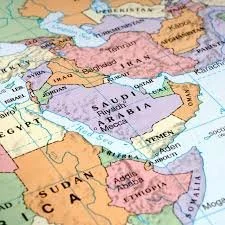
War in the Middle East
A strategic look at how disruption in one of the world’s most important maritime chokepoints is reshaping export costs, supply chains and long-term resilience.
What happens in the Strait of Hormuz does not stay in the Gulf. For exporters, the recent disruption is not simply a regional security issue or an energy-market headline. It is a direct reminder that global trade remains highly exposed to a small number of critical routes. As of 20 March 2026, the International Maritime Organization has referred to the purported closure of the strait, while the International Energy Agency has described shipping through Hormuz as having been reduced to a trickle following the conflict that began on 28 February 2026.
The reason this matters is straightforward. The Strait of Hormuz is one of the world’s most important trade chokepoints. The IEA says around 20 million barrels per day of crude oil and oil products moved through the strait in 2025, representing about 25% of global seaborne oil trade. It also notes that disruption would have major consequences for global gas markets. The EIA likewise reports that about one fifth of global LNG trade passed through Hormuz in 2024, with the overwhelming majority of those flows heading to Asian markets.
For exporters, the first effect is cost. When energy markets tighten, transport costs rarely stay still for long. UN Trade and Development has warned that higher energy, fertiliser and transport costs, including freight rates, bunker fuel prices and insurance premiums, are already creating wider pressures across global supply chains. At the same time, the IEA has announced a 400 million barrel collective emergency oil release by member countries in response to the disruption, which underlines the scale of the shock rather than reducing its significance.
The second effect is reliability. When flows through a major maritime corridor are disrupted, the damage is not confined to cargo that would have passed directly through that route. Delays spread through vessel scheduling, insurance arrangements, supplier commitments and inventory planning. UNCTAD has stated that shipping flows through the strait have been disrupted and that the ripple effects extend across maritime transport and global supply chains. The IEA has added that alternative bypass capacity is limited to an estimated 3.5 to 5.5 million barrels per day, far below normal transit volumes. In other words, there is no easy substitute when a route of this scale comes under pressure.
There is also a broader inflationary effect that many exporters may underestimate. UNCTAD reports that around one third of global seaborne fertiliser trade passes through the Strait of Hormuz, and warns that rising energy, transport and fertiliser costs can quickly feed through into food prices and wider cost-of-living pressures. That matters even for businesses far removed from oil and gas. Packaging, manufacturing, food processing, chemicals, logistics and consumer goods can all feel the strain when input costs rise and customers become more price-sensitive. This is why Hormuz should be seen not only as an energy issue, but as a trade competitiveness issue.
The longer-term question is whether this becomes a turning point in how export strategy is designed. For years, many international supply chains were built for efficiency first. Low cost, lean inventory and tightly timed delivery models made commercial sense in relatively stable conditions. That logic becomes more fragile when chokepoints become recurring sources of disruption. UNCTAD’s recent analysis highlights how geopolitical shocks in critical maritime routes can transmit rapidly across commodity markets and supply chains, while the IEA notes that countries in the Gulf remain heavily reliant on Hormuz because alternative routes are limited. The lesson is clear: resilience can no longer be treated as a secondary consideration.
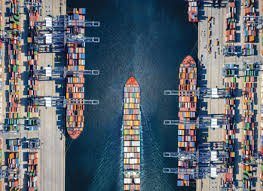
Disruption in the Strait of Hormuz is exposing how vulnerable global trade remains to critical maritime chokepoints.
For exporters, that means this is the right moment to review exposure in practical terms. Which markets depend on vulnerable routes? Which suppliers are highly energy-sensitive? Which contracts leave too much room for margin erosion when freight, fuel or insurance costs spike? Which customers may accept longer lead times, and which will not? The businesses that navigate this period best are unlikely to be the ones that forecast geopolitics perfectly. They will be the ones that build flexibility into sourcing, inventory, logistics and customer commitments before the next disruption arrives. That conclusion is consistent with the current picture from both the IEA and UNCTAD: the duration and intensity of the disruption will determine the scale of the impact, but the vulnerability itself is already visible.
The Strait of Hormuz disruption should therefore be understood as a strategic warning. In the short term, it raises costs, weakens predictability and places pressure on margins. In the longer term, it is likely to push more firms towards route diversification, stronger supplier risk analysis, more robust inventory policies and a sharper focus on export resilience. The businesses that respond early will be better placed not only to protect current trade, but to compete more confidently in a world where geopolitical friction is becoming a permanent feature of international commerce.
OpenVentures Consulting helps businesses assess export risk, strengthen international market strategy and build more resilient routes to growth. If your organisation is reviewing supply chain exposure, market-entry priorities or export contingency planning, this is the time to act