
Global Commerce Rewired: Supplier Shifts, Rising Tariffs and the Power of E-Commerce
International growth has not become less attractive. It has become less forgiving.
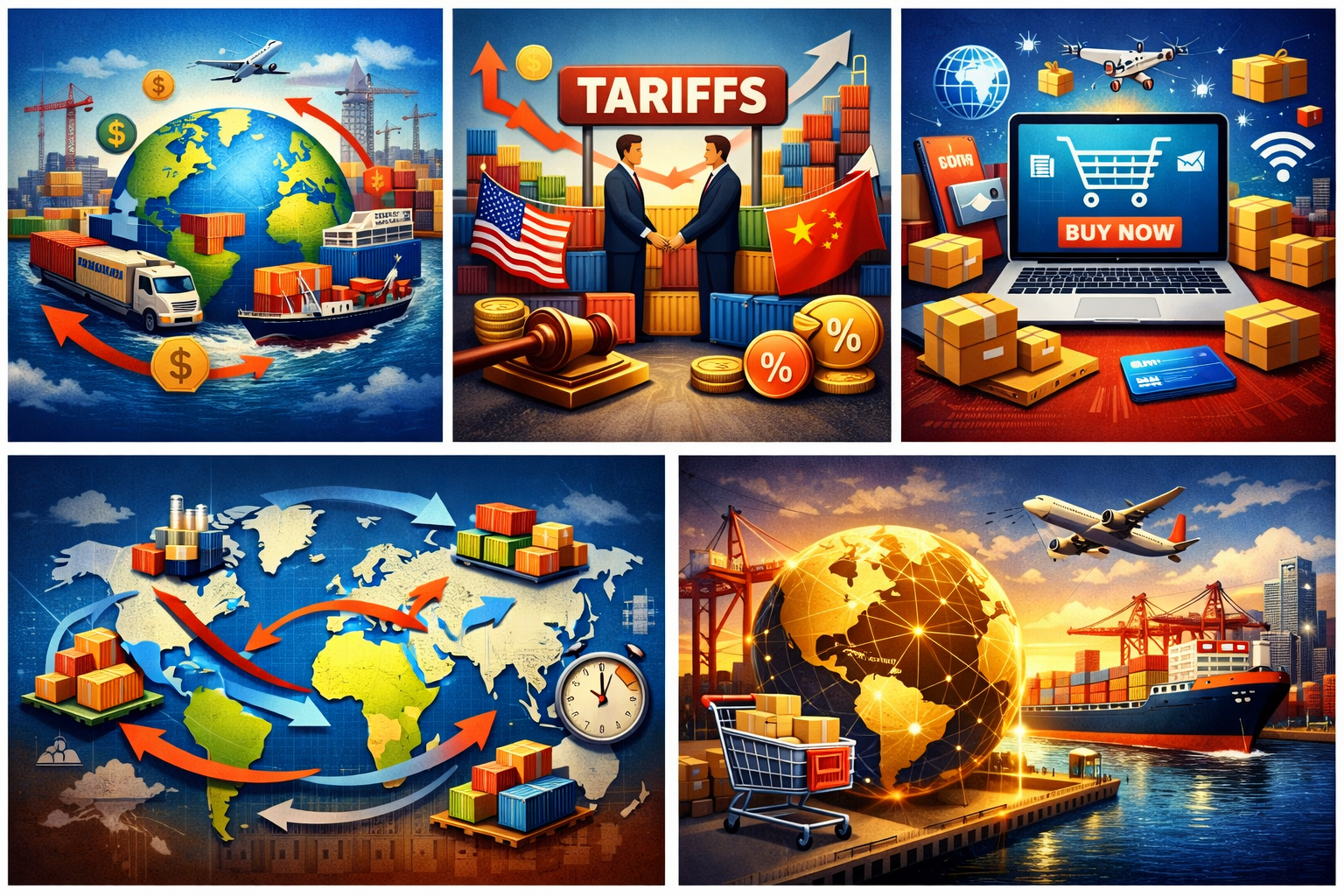
The rules of global trade are being rewritten in real time. Supply chains that once looked efficient now look exposed. Tariffs that once seemed manageable now threaten margins. And e-commerce, once considered a tactical sales channel, has become a serious route to international market entry.
Three forces are driving this shift.
First, geopolitical tensions are changing trade routes, supplier choices and sourcing strategies. Second, rising protectionism is adding cost, friction and uncertainty to cross-border trade, especially in manufacturing and agriculture. Third, global e-commerce platforms are making it easier for SMEs and mid-sized firms to test and enter international markets without committing to a full physical presence from day one.
This is no longer an operational issue buried in procurement or logistics. It is a strategic challenge that affects resilience, growth and profitability.
Global Trade Has Entered a More Volatile Era
In recent years, political conflict, regulatory disruption and regional instability have exposed the fragility of global value chains. Businesses that built their international models around cost efficiency alone are now being forced to rethink what resilience really means.
That shift matters because supplier strategy is no longer just about price. It is about continuity, control and commercial risk.
The more relevant questions now are:
Which suppliers reduce exposure to disruption?
Where is the business overdependent on one geography?
How can service levels be protected without eroding margin?
What sourcing model supports growth as well as resilience?
These are strategic decisions, not just procurement decisions.
Geopolitical Tensions Are Forcing Supplier Recalibration
One of the clearest consequences of geopolitical instability is a change in how companies choose suppliers. Nearshoring, dual sourcing and regional diversification are increasingly being used to reduce reliance on distant or politically exposed supply chains.
For many firms, the lowest-cost supplier is no longer automatically the best supplier.
A cheaper source can become more expensive when delays, freight volatility, compliance complexity or political risk are added in. In contrast, a supplier closer to the target market may offer better continuity, faster response times and lower overall risk.
This means supplier decisions need broader evaluation criteria. Cost still matters, but so do resilience, route-to-market alignment, lead time, regulatory exposure and the supplier’s ability to support long-term market development.
Rising Tariffs Are Reshaping the Economics of Expansion
Alongside geopolitical disruption, protectionism is changing the cost structure of international trade. Tariffs, trade barriers and politically driven policy shifts are placing additional pressure on exporters across manufacturing, agriculture and other traded sectors.
The problem is not simply the tariff itself. It is the chain reaction that follows.
Tariffs can distort demand, compress channel margins, disrupt forecast accuracy and place unexpected strain on working capital. Businesses often discover too late that what looked like a commercially viable market is no longer sufficiently profitable once landed costs, rebates, distributor expectations and local price sensitivity are fully understood.
For this reason, a much sharper view of export economics is needed. Basic cost-plus thinking is often too blunt for today’s environment.
Why Cost-Plus Pricing Is No Longer Enough
Many businesses still calculate export pricing by taking a domestic cost base and adding freight, duties and a margin. That may look tidy internally, but it often fails in-market because it ignores how buyers actually assess price and value.
A stronger approach is market-led and value-anchored.
That means understanding:
the local reference price
what competitors include in their offer
what channel partners need to earn
what value customers will pay for
what net margin remains after the true cost to serve
When export pricing is handled strategically, it supports channel commitment, protects contribution and reduces the likelihood of reactive discounting later. When it is handled poorly, it can undermine an otherwise promising market-entry plan.
E-Commerce Is Lowering the Barrier to International Entry
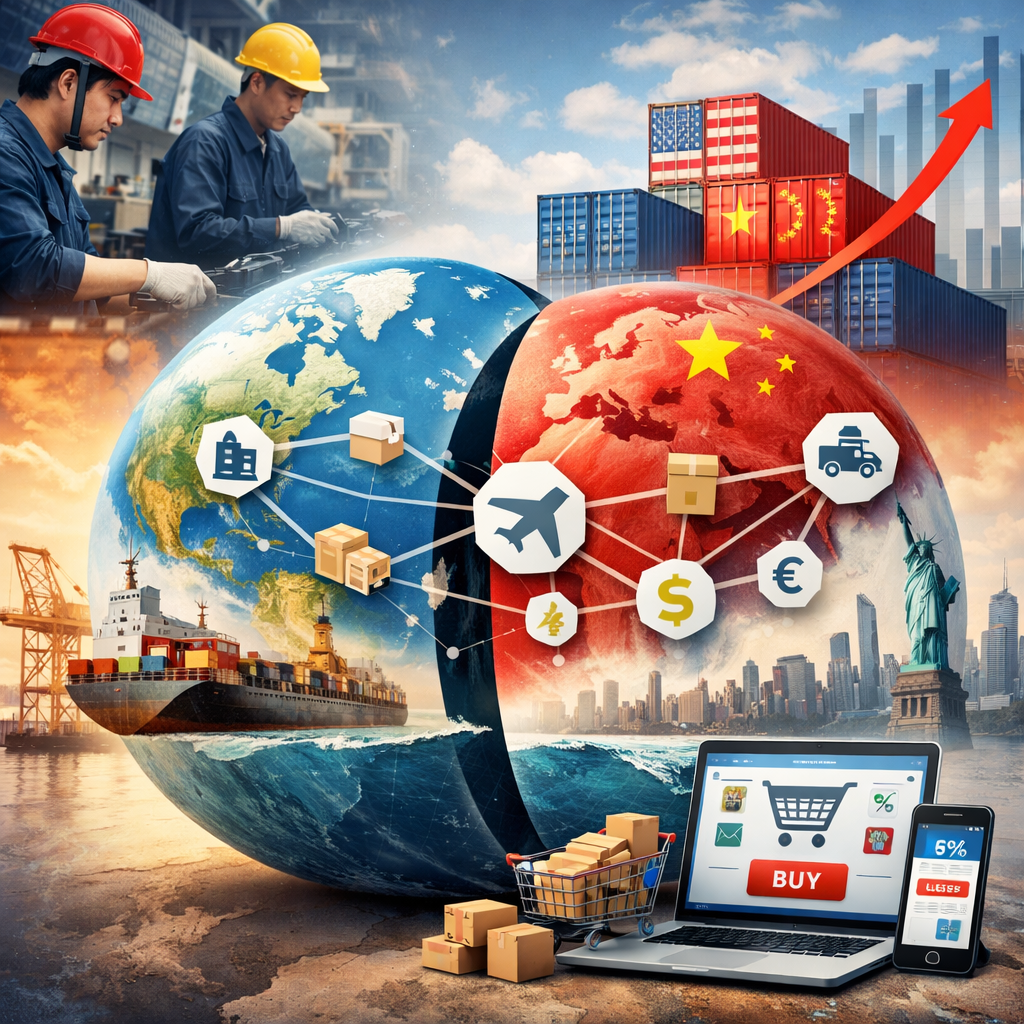
While trade friction is rising, digital tools are opening new routes to market.
Platforms such as Amazon, Alibaba and regional online marketplaces are making it easier for SMEs and mid-sized firms to reach foreign buyers, test demand and enter new markets without immediately building a full local infrastructure.
That changes the expansion model significantly.
E-commerce can now be used to:
validate market demand early
test pricing and positioning
gather local customer insight
build visibility in-market
create revenue before deeper investment
This does not remove the need for strategy, but it does create a more agile and lower-risk route to first entry.
Digital Export Enablement Is Now a Strategic Capability
Selling online is only one part of the picture. What matters more is the broader capability behind it: digital export enablement. This means using digital systems, data and workflows to support market intelligence, compliance, commercial activation and supply chain visibility.
Digital export enablement delivers something increasingly valuable: control.
It helps businesses compare markets more effectively, reduce compliance errors, speed up commercial execution and improve visibility across channels and partners. In a volatile trading environment, that control becomes a competitive advantage.
The firms that succeed internationally will not just be those with strong products. They will be those with better data, tighter execution and more disciplined expansion models.
Market Entry Still Depends on Having the Right to Win
Digital tools may make internationalisation easier, but they do not make it automatic.
Many expansion efforts fail not because the market lacked demand, but because the company lacked the internal capabilities to execute consistently at distance. That includes route-to-market clarity, channel discipline, pricing governance, delivery capability and leadership bandwidth.
Before entering a new market, one question matters more than most: Do we have the right to win in this market?
That means having:
a clear market thesis
a realistic pricing and margin model
the right partner or channel structure
operational readiness
governance strong enough to scale without losing control
Expansion should be driven by evidence and capability, not optimism.
What Should Happen Next
The current trade environment demands a more deliberate style of growth.
The first step is to review supplier concentration and identify where geopolitical exposure could damage service, cash flow or margin. The next is to stress-test export pricing against tariff, logistics and channel scenarios. Finally, digital systems and market-entry processes should be assessed to ensure they are strong enough to support controlled and repeatable expansion.
The winners in this market will not necessarily be the largest firms. They will be the best-prepared.
They will be the businesses that can adapt sourcing intelligently, protect margins under tariff pressure and use digital channels to enter and scale new markets with confidence.
Why OpenVentures Consulting
OpenVentures Consulting helps businesses navigate international growth with more clarity, structure and commercial confidence. The firm supports clients with export strategy, international market entry, partner identification, digital export enablement, pricing logic and risk mitigation.
In a world of supplier shifts, rising tariffs and more complex international trade, practical guidance matters.
Because today, international growth is still full of opportunity, but only for businesses that combine ambition with discipline.
If your business is reviewing supplier strategy, reassessing international pricing, or preparing to enter new markets, OpenVentures Consulting can help you build a smarter, lower-risk route to growth.
Contact OpenVentures Consulting to discuss your international expansion strategy.