

BLOG
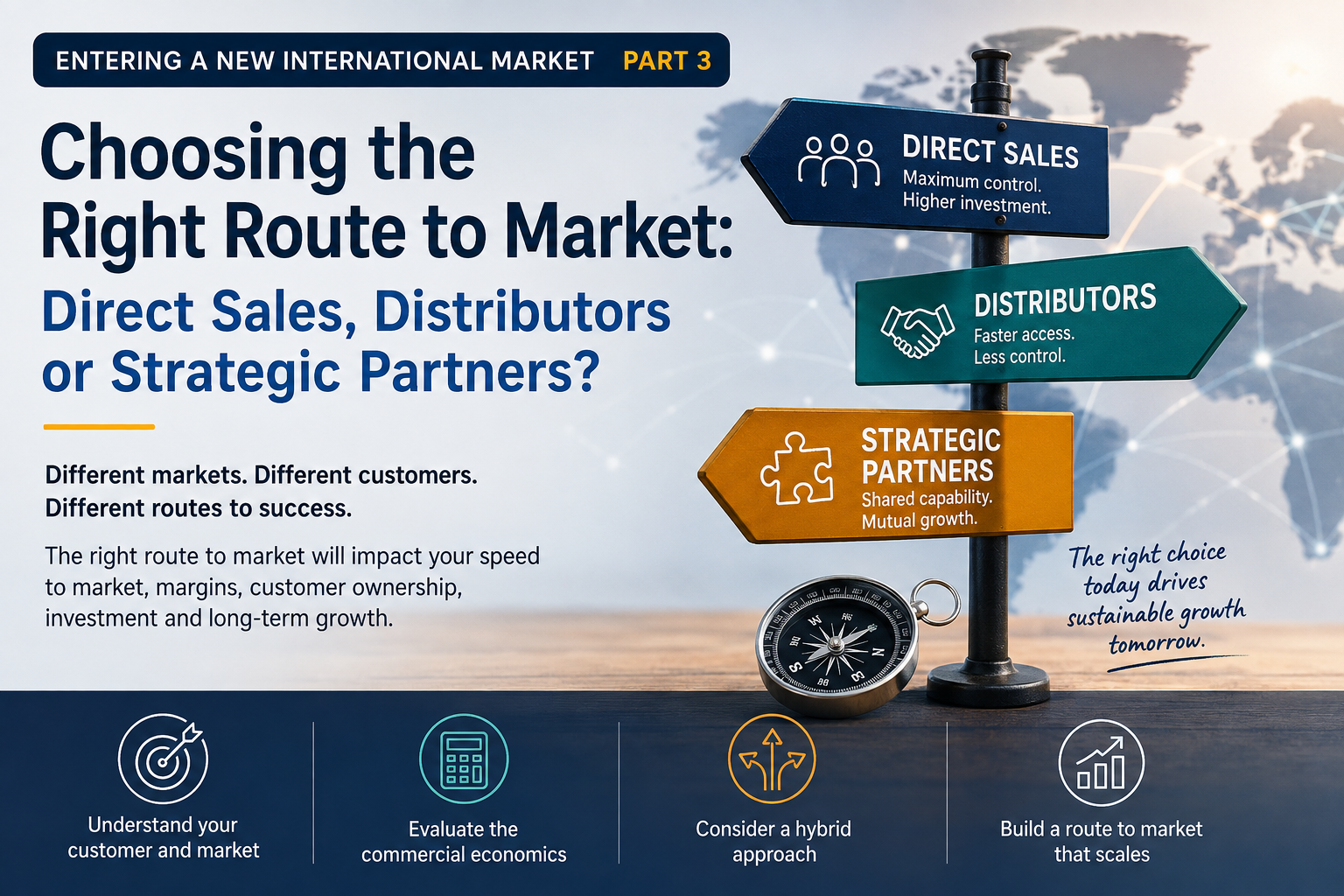
Choosing the Right Route to Market: Direct Sales, Distributors or Strategic Partners?
Choosing the right international route to market? Compare direct sales, distributors and strategic partnerships to find the best model for profitable international expansion.
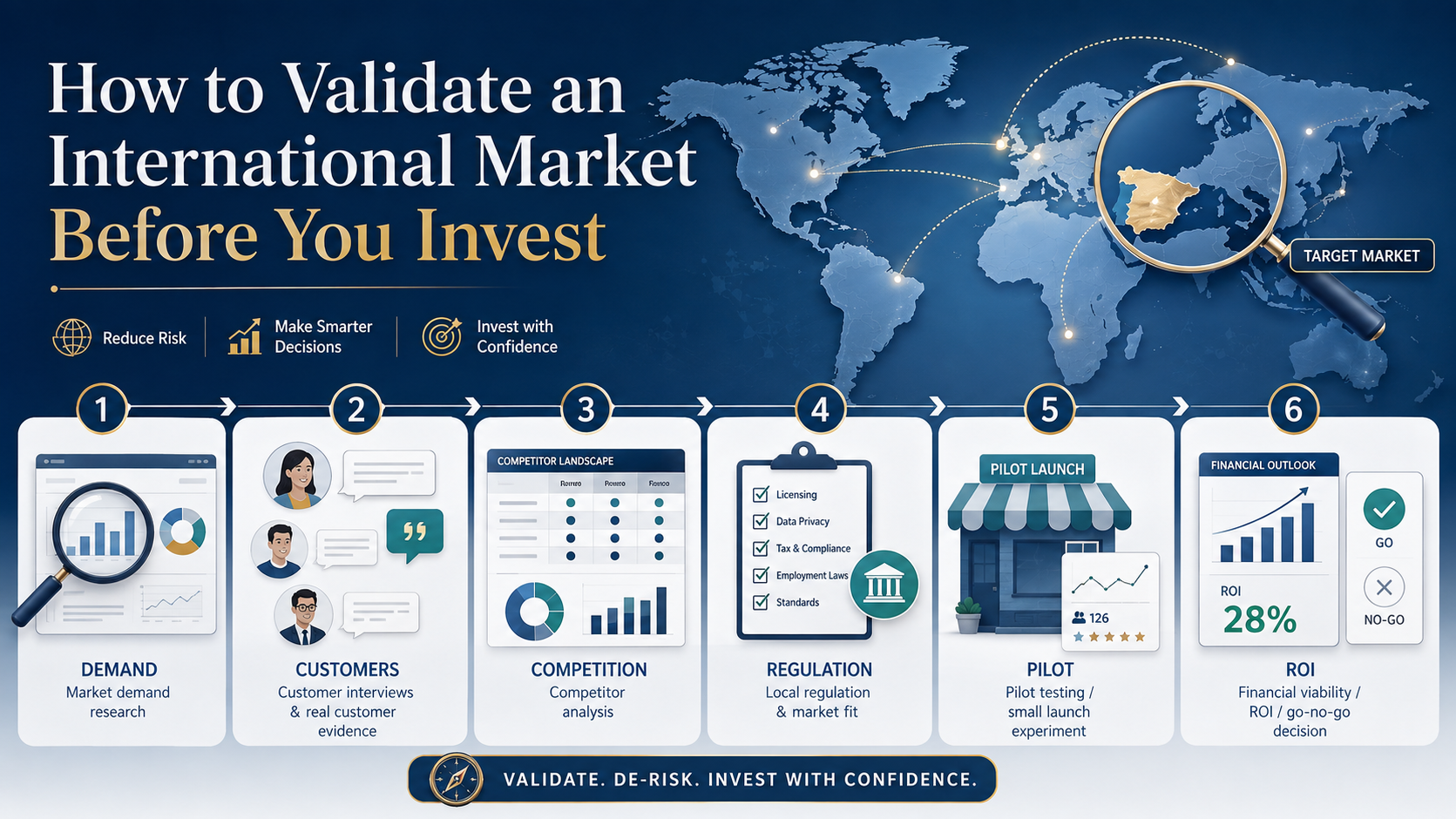
How to Validate an International Market Before You Invest
Learn how to validate an international market before investing by testing customer demand, value propositions, pricing and routes to market with real-world evidence.
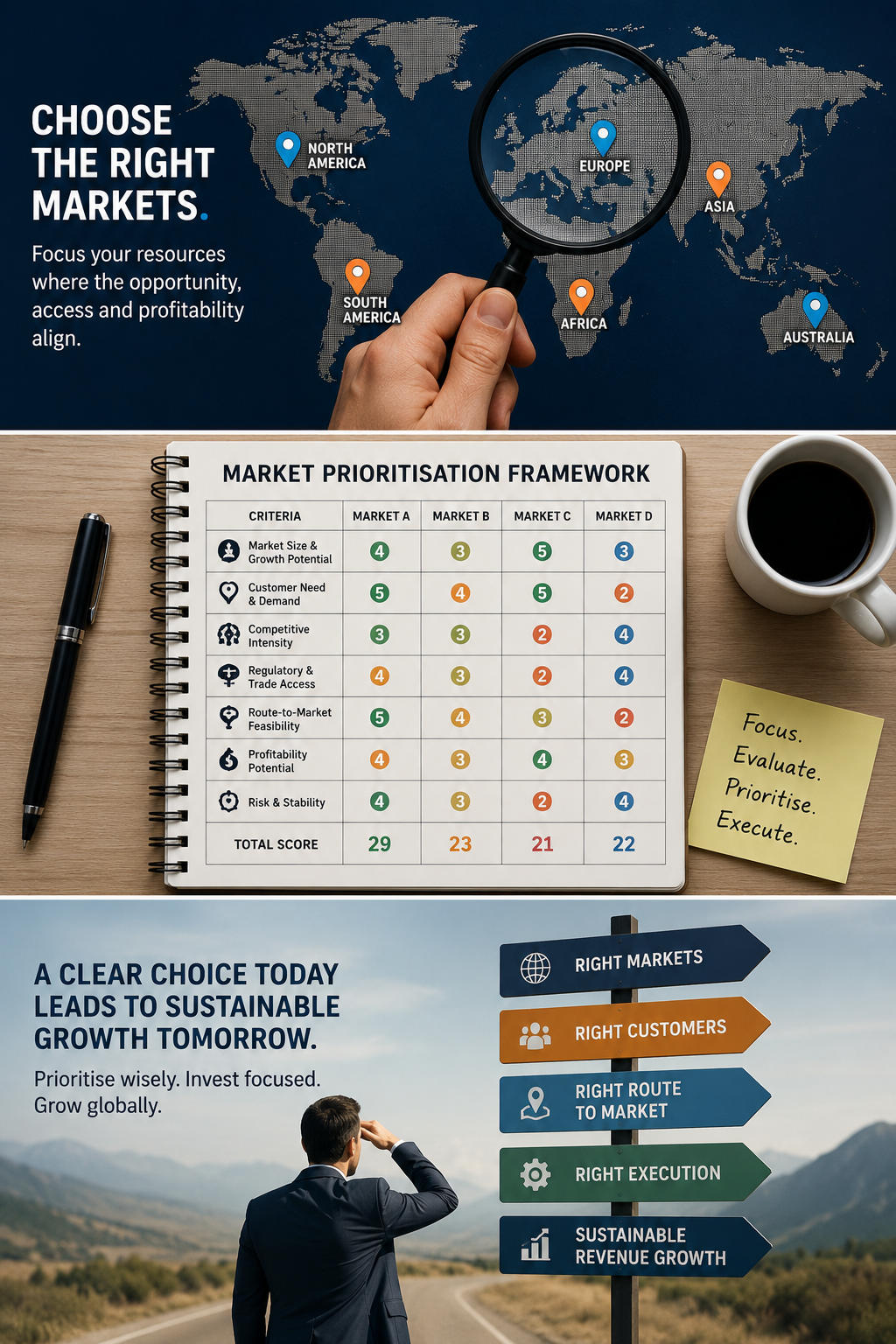
How to Prioritise International Markets: Choosing Where to Invest First
Learn how CEOs of SMEs can prioritise international markets using a practical framework that assesses customer demand, competition, route-to-market options, profitability, regulatory complexity and strategic fit. Focus your resources on the markets where opportunity and your ability to execute are strongest.
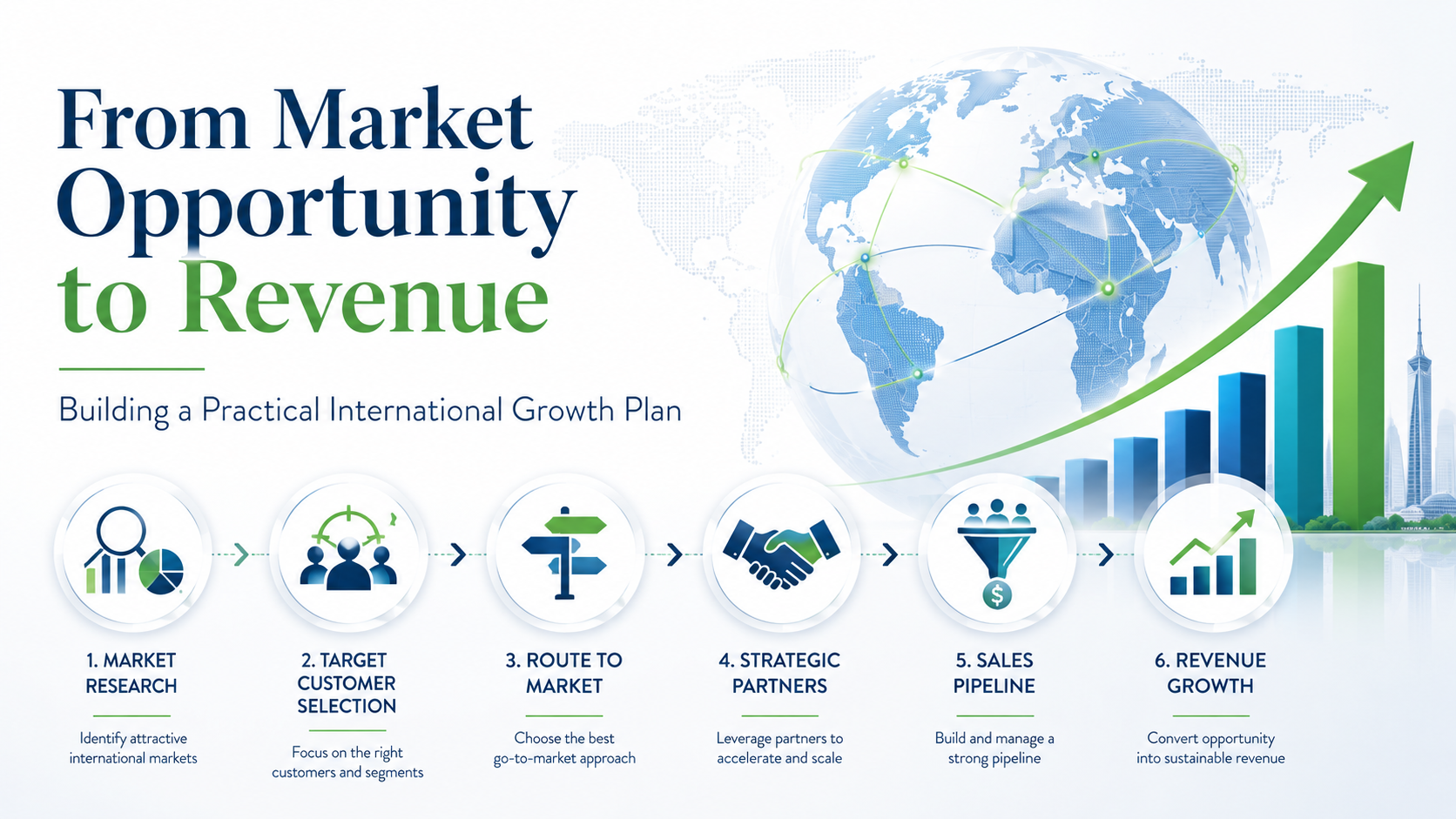
From Market Opportunity to Revenue: Building a Practical International Growth Plan
Discover how SMEs can turn international market opportunities into profitable revenue through focused research, customer targeting, market positioning, route-to-market planning, partner selection and disciplined execution. This practical guide helps CEOs build a clear, measurable international growth plan.
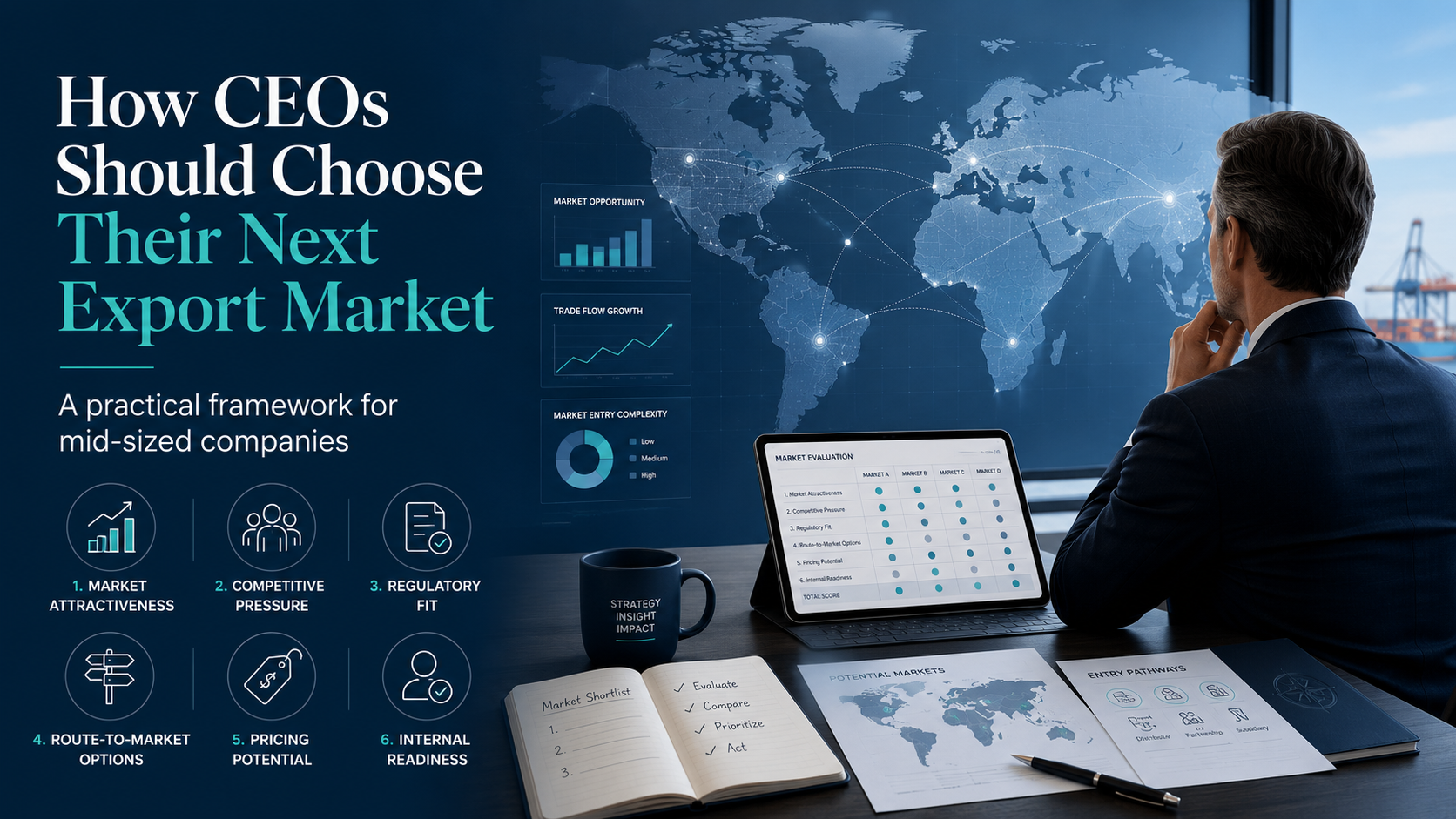
How CEOs Should Choose Their Next Export Market: A Practical Framework for Mid-Sized Companies
Before entering a new export market, CEOs need more than ambition. They need evidence, structure, and a clear view of risk, margin, competition, compliance, and internal readiness.
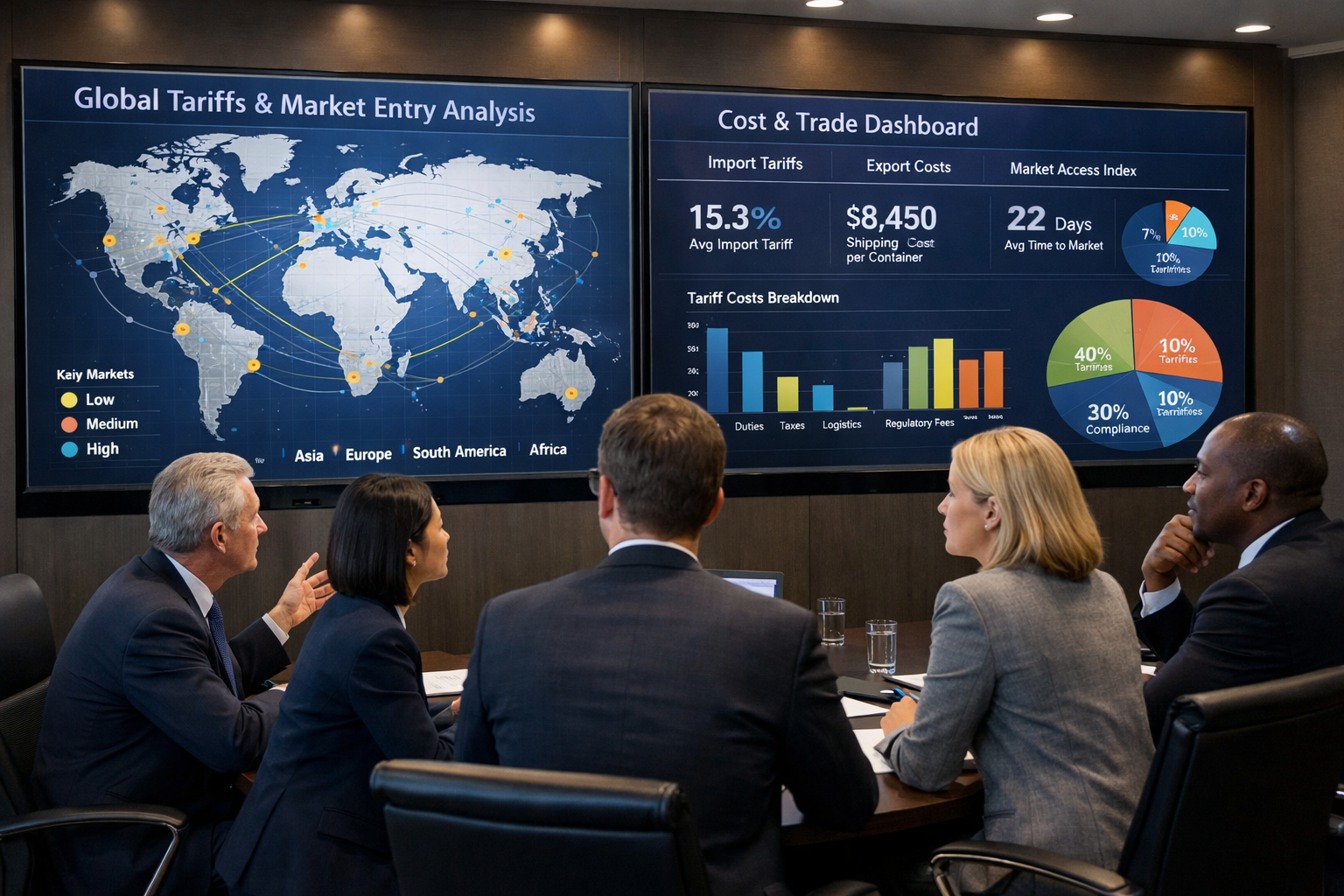
How to Run a Tariff Exposure Audit Before You Enter a New Market
Learn how to run a tariff exposure audit before entering a new market. Assess duties, rules of origin, supply chain risk, pricing, margins and routes to market to reduce risk and protect commercial viability.

Global Commerce Rewired: Supplier Shifts, Rising Tariffs and the Power of E-Commerce
Explore how geopolitical tensions, rising tariffs and e-commerce are reshaping international growth, and how businesses can adapt suppliers, protect margins and build more resilient routes to market.

The Strait of Hormuz Disruption: Why Exporters Need to Rethink Risk Now
Disruption in the Strait of Hormuz is exposing the vulnerability of global trade to geopolitical shocks. Explore what rising energy, freight and insurance costs mean for exporters—and the practical steps businesses can take to protect margins, strengthen supply chains and build greater resilience.

The “right to win” test: capabilities you must have before you launch
Entering a new market is not won on ambition, it is won on execution. This article introduces the “right to win” test: a practical CEO/CFO checklist of the capabilities you must have before launching internationally. It covers market thesis and segmentation, route-to-market and channel control, pricing and margin guardrails, a repeatable sales operating system, delivery and service readiness, compliance and contracting, resourcing, and the KPIs and decision gates that protect cash and reduce risk. Use it to spot gaps early, strengthen your go-to-market plan, and launch with confidence.

From Politics to Pricing: Protecting Export Margins in 2026
Learn how European exporters can protect margins from tariff and trade-policy volatility in 2026 by stress-testing pricing, assessing exposure, reviewing routes to market and strengthening commercial risk controls.

GTM vs RTM: Why Distribution Is Back in Fashion
Expanding internationally is not only about having a strong go-to-market plan. It is about building a route-to-market that customers can actually buy through, and that you can deliver through repeatedly. This article explains the difference between GTM and RTM, why distribution is back in focus, and how to stress-test channel economics, coverage, fulfilment and service levels before you scale.

Export Pricing: Why Cost-Plus Fails and What to Use Instead
Stop relying on cost-plus export pricing. Learn a CFO-ready approach that combines landed-cost modelling, local market price corridors, and value-based positioning to protect margins, support distributors, and scale international growth with confidence.

Common Pricing Mistakes in Export Markets.
Export pricing can quietly erode margins and damage brand equity long before anyone sees a P&L variance. Too many exporters rely on simple cost-plus formulas, lifting domestic prices for shipping and duties and hoping the numbers hold in Germany, the Gulf or Switzerland. Customers, however, care about value versus local alternatives, not your internal cost base. At the other extreme, racing to the bottom on price may buy early volume, but it also accelerates margin erosion, invites competitive retaliation and makes any future price increase extremely difficult.
The real danger is that pricing mistakes ripple through channels and across borders. If there is not enough room for distributor and retailer margins, partners will quietly deprioritise your products. Deep discounts in one territory can leak through grey markets, reset price expectations elsewhere and devalue the brand globally. A sustainable export pricing strategy starts with understanding local willingness to pay, defining a clear pricing corridor that protects both margin and positioning, and building in flexibility to respond to currency shifts and competitive moves. Get this right, and pricing becomes a strategic asset rather than a recurring problem in your international expansion.

Why Digital Export Enablement Matters for CEOs
International expansion is no longer a linear project. It is a dynamic programme that blends market insight, regulatory readiness, commercial execution, and partner enablement. Digital export enablement provides the operating system for this work. It uses data, cloud workflows, and AI to help SMEs and mid-market firms across EMEA choose the right markets and execute with discipline.
For CEOs and CFOs the dual challenge is clear. First, build a defensible view of where to play by using live indicators such as search demand, distributor benchmarks, and regulatory pathways. Second, deliver precisely with compliant product data, localised content, and instrumented supply chains. Technology is no longer optional because it removes the four common failure modes: slow decisions, rework, compliance exposure, and weak partner performance.
The prize is tangible. Firms gain lower cost to serve, faster time to revenue, and a scalable playbook that can be cloned market by market. OpenVentures Consulting partners with leadership teams to design and run this capability so that expansion across EMEA is faster, safer, and more profitable.

Digital Export Enablement: How Tech Can Open New Markets
Discover how digital export enablement helps CEOs cut costs, gain market insight, scale globally, and enter new markets with precision and confidence.

A New Chapter in Transatlantic Trade
"On 27 July 2025, the EU and US reached a landmark trade and tariff agreement, capping US tariffs on most EU goods at 15% and rolling back duties on strategic sectors like automotive, aerospace, and chemicals. Worth over €1.6 trillion annually, the EU–US trade relationship is the largest in the world, supporting millions of jobs and deeply integrated supply chains. The deal promises stability, improved market access, and stronger cooperation on energy security, technology, and fair competition."