
How to Validate an International Market Before You Invest
Turning Desktop Research into Real Customer Evidence
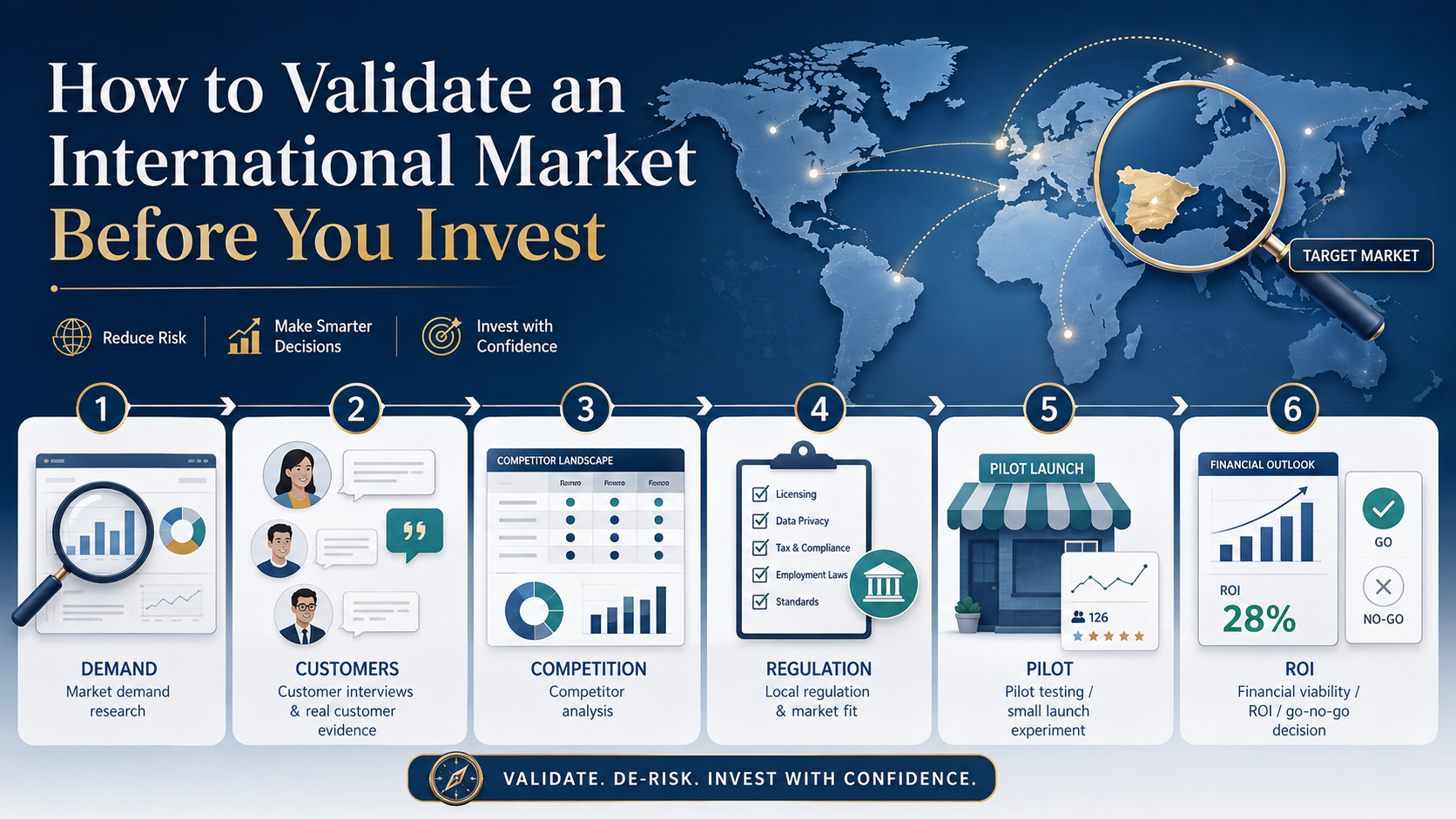
Part 3 of the OpenVentures Consulting “From Market Opportunity to Revenue” series
Desktop research is an essential part of international market selection. It can tell you about market size, growth rates, competitors, regulation, pricing and potential routes to market.
But it cannot tell you with certainty whether customers will buy from you.
For CEOs considering international expansion, this distinction matters. A market can look highly attractive in a spreadsheet and still prove difficult, expensive or slow to penetrate.
Before committing significant budget, management time or resources, the assumptions behind the market opportunity need to be tested with real customers and market participants.
Desktop research should narrow the opportunity. Customer validation should determine whether you invest.
Start by identifying the assumptions that matter
Every market-entry plan contains assumptions.
You may believe customers are dissatisfied with existing suppliers, that your product offers meaningful differentiation, that your pricing will be competitive or that a distributor can provide access to the right customers.
Before investing, turn these assumptions into questions that can be tested.
For example:
Do target customers recognise the problem you solve?
Is that problem sufficiently important for them to act?
How are they solving it today?
What would persuade them to change supplier?
Who influences and approves the purchase?
What price expectations exist?
What barriers could prevent adoption?
How long is the likely sales cycle?
The objective is not to prove that the original strategy is correct. It is to discover where it may be wrong.
Speak to customers — not just intermediaries
Potential distributors, agents and partners are valuable sources of market intelligence, but they should not replace direct customer conversations.
Speak with a representative group of prospective customers within your target segment.
These conversations should explore customer priorities, purchasing behaviour, existing suppliers, perceived gaps in the market and reactions to your value proposition.
Avoid simply asking, “Would you buy this?”
Instead, understand how purchasing decisions are actually made. What triggers a change? What evidence does the customer require? What commercial, technical or operational objections might arise?
The difference between general interest and genuine buying intent can be substantial.
Test your value proposition
A proposition that works successfully in your domestic market may not translate directly into another country.
Customers may value different benefits. They may have different service expectations, purchasing criteria or attitudes towards risk.
Use validation interviews to test whether your messaging is relevant.
Can customers quickly understand the value you provide? Do they see a meaningful difference between your offer and existing alternatives? Is that difference important enough to justify changing supplier?
Customer feedback can help refine your positioning before you invest heavily in marketing or sales activity.
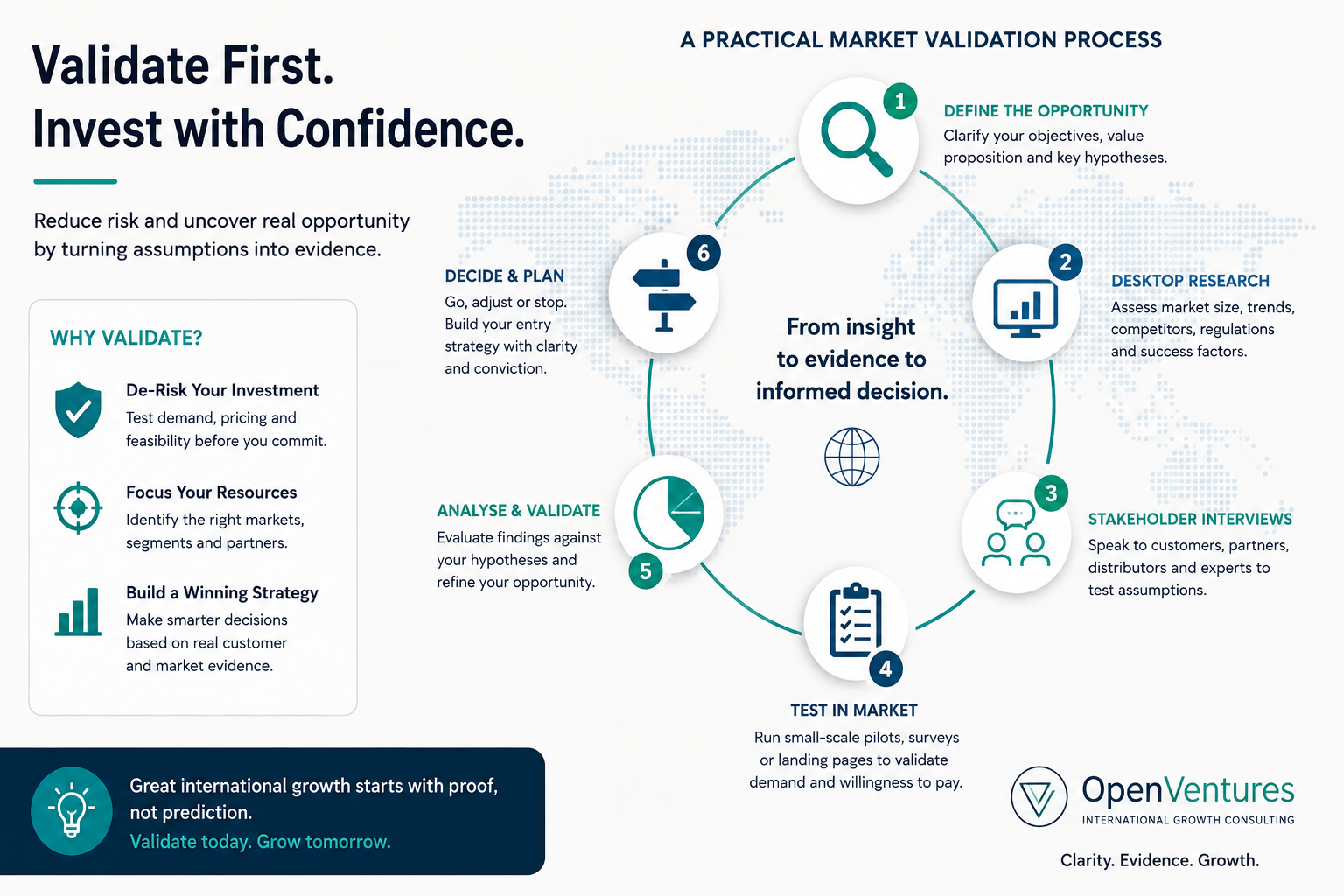
Validate pricing and route to market
Market validation should also test the commercial model.
Research competitor pricing, but go further. Understand what customers expect to pay, how discounts are negotiated, typical payment terms and what margins distributors or other intermediaries require.
At the same time, test how customers prefer to buy.
A direct sales model may appear attractive because it protects margin, but it may be unrealistic if customers expect local technical support or established distributor relationships.
The right route to market must work for both the customer and your economics.
Look for patterns, not individual opinions
One customer saying they love your product is not market validation. Neither is one distributor promising significant sales.
Leadership should look for consistent patterns across multiple conversations.
The purpose of validation is to build enough evidence to make a better investment decision.
At the end of the process, management should be able to answer:
Is there a clearly defined customer segment with a genuine need, a credible reason to buy from us and a commercially viable route for reaching them?
If the evidence is weak, adapt the proposition, rethink the target segment or reconsider the market.
If the evidence is strong, you can move forward with greater confidence.
Turn market potential into commercial evidence
International growth will always involve uncertainty. The objective is not to eliminate risk, but to reduce avoidable risk before significant resources are committed.
A focused validation exercise can be considerably less expensive than discovering six months into a market launch that the original assumptions were wrong.
OpenVentures Consulting helps companies move beyond desktop market research to validate international opportunities with real market evidence. We help identify and engage potential customers and partners, test value propositions, assess routes to market and translate the findings into a practical market-entry plan.
Considering a new international market?
Before committing budget, people or management time, make sure the commercial opportunity has been tested outside the boardroom.
Contact OpenVentures Consulting to discuss how we can validate your target market, reduce market-entry risk and build a clearer path from opportunity to revenue.
Email:sales@openventuresconsulting.com
Website:www.openventuresconsulting.com